
AI Dropshipping in 2026: How to Start a Store Step by Step
Starting an online store sounds exciting. But there is a problem.
You need to find products, write descriptions, create product images, build a website, and answer customer questions.
Doing all these things alone can take a lot of time.
This is where AI dropshipping comes in.
AI tools can help you research products, write store content, create marketing ideas, and manage some daily tasks. They can make the work easier, even if you are new to ecommerce.
But AI cannot do everything. You still need good products, reliable suppliers, clear pricing, and happy customers.
In this guide, you will learn what AI dropshipping is, how it works, which tasks AI can help with, and how to start your own store step by step.
What Is AI Dropshipping?
AI dropshipping is a way of running a dropshipping business with the help of artificial intelligence tools.
First, let’s understand dropshipping.
Dropshipping is a business model where you sell products online without keeping them in your own warehouse.
Here is a simple example:
- You create an online store.
- A customer buys a product from your store.
- You send the order to your supplier.
- The supplier prepares and ships the product to the customer.
- You earn money if the selling price is higher than your total costs.
AI can help with different parts of this process.
For example, you can use AI to find product ideas, write product descriptions, create advertising content, and answer common customer questions.
Important: AI does not automatically find winning products or guarantee sales. It is a tool that helps you make decisions and complete tasks.
How Does AI Dropshipping Work?
Imagine you want to sell home decoration products.
You do not know which products people want to buy.
You can use AI to help you explore ideas.
For example, you can ask an AI tool:
“Give me 10 home decoration product ideas for an online store. Focus on useful products that are easy to explain and ship.”
The AI may suggest desk lamps, storage boxes, wall decorations, and other products.
You can then research those ideas, check suppliers, compare prices, and choose products that make business sense.
After that, AI can help you write product descriptions and prepare marketing content.
The actual supplier, product quality, order fulfilment, and customer service still need proper attention.
7 Ways to Use AI in a Dropshipping Business
AI can help with several important tasks.
1. Find Product Ideas

Finding products is one of the first challenges for a new dropshipping business.
You need products that people may want to buy and that you can sell at a reasonable price.
AI can help you create product ideas based on:
- A specific customer group
- A product category
- A customer problem
- Seasonal shopping needs
- Popular product features
For example, you can ask:
“Suggest 15 useful kitchen products for people living in small apartments. Explain why each product may be useful.”
This gives you ideas to investigate.
Do not select a product only because an AI tool says it is popular. Check real demand, competition, supplier quality, shipping costs, and customer reviews.
2. Research Products and Competitors
After finding a few ideas, you need to research them.
AI can help you organize your research.
You can ask it to compare:
- Product features
- Target customers
- Competitor prices
- Customer problems
- Possible selling points
You can also use Google Trends to compare search interest in different product ideas.
For example, compare two product types and check which one has stronger interest in your target country.
Remember that Google Trends shows relative search interest, not the exact number of people who will buy a product.
3. Write Product Descriptions
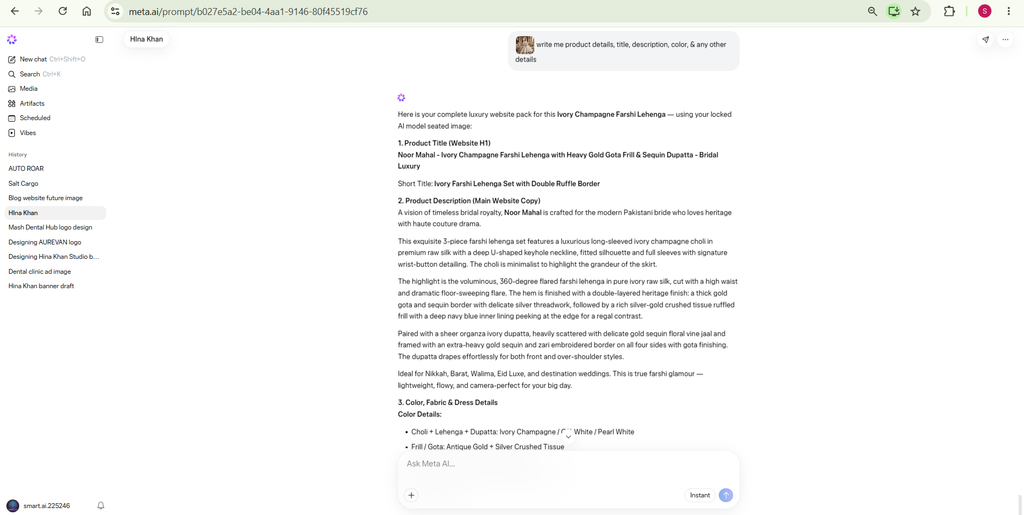
A product page needs a clear description.
Customers want to know what a product does, what it is made of, and why they may need it.
AI can help you write simple product descriptions.
For example, you can give it the product’s real features and ask:
“Write a simple product description for this product. Explain its main features and benefits. Do not add features that are not provided.”
This can save time.
Always check the description before publishing it. AI may add incorrect details if you do not provide enough information.
4. Create Product Images and Marketing Ideas
Good product images help customers understand what they are buying.
AI image tools can help create marketing graphics, backgrounds, and promotional ideas.
You can also use AI to prepare:
- Social media captions
- Advertising headlines
- Product launch ideas
- Short video scripts
- Email campaign drafts
However, do not use an AI image that makes a product look different from the real item.
Customers should receive what they see in your store.
5. Create an Online Store
You need a website where customers can view products and place orders.
Popular ecommerce options include Shopify and WooCommerce.
Shopify is a hosted ecommerce platform. WooCommerce is an ecommerce plugin for WordPress.
AI can help you plan your store structure, write website content, and prepare product categories.
For example, you can ask AI to suggest a simple store menu for a home decoration business.
A basic store may include:
- Home
- Shop
- About Us
- Contact
- Shipping Policy
- Return Policy
You can also explore our guide to the best AI tools for small business.
6. Answer Customer Questions
Customers may ask about delivery times, product sizes, returns, or payment methods.
AI chatbots can help answer common questions.
For example, a chatbot may answer:
“How long does delivery take?”
But the chatbot needs correct information from your business.
If it does not know the answer, it should direct the customer to a real person instead of guessing.
This is especially important for refunds, payment problems, and delivery complaints.
7. Improve Your Marketing
Finding customers is one of the biggest challenges in dropshipping.
AI can help you prepare marketing content for different platforms.
For example, you can ask it to create:
- Facebook ad headlines
- Instagram captions
- TikTok video scripts
- Email subject lines
- Product launch campaigns
You can also ask AI to create different versions of an advertisement so you can test which message works better.
But remember: an advertisement is not successful just because it sounds good. You need to measure clicks, orders, advertising costs, and profit.
Best AI Tools for a Dropshipping Business
You do not need dozens of AI tools to start.
Here are some tools that can help with different tasks.
| Tool | How it can help |
|---|---|
| ChatGPT | Product ideas, descriptions, research, and marketing drafts |
| Google Gemini | Research assistance and content ideas |
| Canva AI | Marketing graphics and design |
| Grammarly | Checking spelling and grammar |
| Perplexity | Researching topics and finding sources |
These tools do different jobs. They are not all dropshipping platforms, supplier networks, or automatic store builders.
Check their current plans and features before paying for a subscription.
How to Start AI Dropshipping Step by Step
You do not need to build a huge store on your first day.
Start with a small plan.
Step 1: Choose a Product Category
Choose one category instead of selling everything.
Examples include:
- Home accessories
- Pet products
- Fitness accessories
- Office products
- Travel accessories
A clear category makes it easier to understand your customers.
Step 2: Research Product Demand
Use search trends, competitor research, and customer feedback to understand whether people are interested in the product.
Look for questions people ask about the product.
Check whether customers already have many choices and what could make your offer different.
Do not confuse high search interest with guaranteed sales.
Step 3: Find a Reliable Supplier
Your supplier is one of the most important parts of your business.
Check:
- Product quality
- Product availability
- Shipping times
- Shipping costs
- Return and refund handling
- Communication
- Tracking information
Order a sample when possible.
A cheap product is not a good choice if it arrives late or does not match the pictures.
Step 4: Calculate Your Selling Price
Before adding a product to your store, calculate all costs.
For example, imagine these costs:
| Item | Example cost |
|---|---|
| Supplier product price | $10 |
| Shipping | $4 |
| Payment and platform costs | $2 |
| Advertising cost per order | $5 |
| Total cost | $21 |
| Selling price | $30 |
| Estimated profit | $9 |
This is only an example, not a guaranteed profit.
Your actual costs may include taxes, refunds, discounts, currency conversion, and other expenses.
If your total cost is higher than your selling price, you lose money.
Step 5: Build Your Store
Choose Shopify or WooCommerce based on your budget and technical needs.
Add your product information, images, prices, shipping details, and policies.
Make sure your website works on mobile devices.
You can read our guide on how much a small business website costs before planning your website budget.
Step 6: Create Your Marketing Content
Use AI to prepare your first product launch.
You can create:
- Three social media posts
- Two short video scripts
- A product announcement
- A simple email campaign
- A few advertising headlines
Review every piece of content before publishing.
Make sure the product claims are accurate and the images match the real product.
Step 7: Test Your Store
Before running advertisements, place a test order if your platform allows it.
Check:
- Does the checkout work?
- Are payment options available?
- Are shipping costs correct?
- Do customers receive order confirmation?
- Can customers contact you?
- Are the policies easy to find?
Fix problems before sending visitors to your store.
Is AI Dropshipping Profitable?

AI dropshipping can be profitable, but there is no guarantee.
AI may save time on research and content creation. It does not remove the normal costs and risks of running a business.
Your profit depends on:
- Product price
- Supplier cost
- Shipping
- Advertising
- Payment fees
- Refunds and returns
- Customer satisfaction
For example, if you sell a product for $30 but spend $21 on the product, shipping, fees, and advertising, your estimated profit is $9 before any other expenses.
You must calculate your real numbers before deciding whether a product is worth selling.
Common AI Dropshipping Mistakes to Avoid
Choosing Products Without Research
AI can suggest products, but it cannot guarantee that people will buy them.
Research demand and competition before investing money.
Trusting Every AI Answer
AI can make mistakes.
Check supplier details, product features, shipping information, and business policies yourself.
Using Fake Product Images
Never show customers a product that looks different from the real item.
Use genuine supplier images or accurate product photography.
Ignoring Customer Service
A dropshipping business still needs to handle questions, complaints, refunds, and delivery issues.
AI can help with simple questions, but customers should be able to reach a real person.
Spending Too Much on Tools
You do not need to buy every AI subscription.
Start with a few useful tools and add more only when you have a clear business need.
Is AI Dropshipping Good for Beginners?
Yes, beginners can use AI to make some tasks easier.
But it is not a business where you simply press a button and start earning money.
You still need to learn how to choose products, work with suppliers, build a store, understand customers, and manage money.
If you have a small budget, start with research and planning before paying for expensive software or advertisements.
A small, well-tested store is a better starting point than a large store full of products you have never researched.
Frequently Asked Questions
What is AI dropshipping?
AI dropshipping means using artificial intelligence tools to help with tasks such as product research, writing descriptions, creating marketing content, and customer support in a dropshipping business.
Can AI start a dropshipping business for me?
AI can help with planning and content, but it cannot take full responsibility for your suppliers, payments, product quality, customer service, and business decisions.
Can I use AI dropshipping with Shopify?
Yes. You can use AI tools alongside Shopify to research products, write descriptions, prepare marketing content, and support store operations.
Do I need money to start AI dropshipping?
You may need money for your ecommerce platform, domain, supplier orders, samples, marketing, and other business costs. The exact amount depends on your setup.
Which AI tool is best for dropshipping?
There is no single best tool for every task. ChatGPT can help with research and writing, Canva AI can help with graphics, and other tools may help with different parts of your workflow.
Is AI dropshipping better than normal dropshipping?
AI can make some tasks faster, but it does not change the basic dropshipping business model. You still need reliable suppliers, good products, and satisfied customers.
Final Thoughts
AI dropshipping can make running an online store easier by helping with product research, descriptions, marketing, and customer support.
But AI is not a shortcut to guaranteed income.
Start with one product category, research your market, find a reliable supplier, and calculate your costs.
Build a simple store and test everything before spending money on advertisements.
Use AI to save time, but make your business decisions with real information.

